
SELF is made up of seven partners from five countries (Spain, Belgium, Portugal, Italy, Slovakia). The partners come from different educational fields and socio-economic sectors and aim to improve the wealth of knowledge on non-technical and professional skills and competencies relevant to higher education (HE) students aspiring to be solo-entrepreneurs. The partners are University of Malaga, University of Aveiro, EDUCATT, IHF asbl, IDP IT, Internet Web Solution and Comenius University Bratislava.
Learn MoreCheck out our latest news!

Ana María Castillo, professor at the University of Málaga (UMA), presents the SELF project in the TV program “LLEGÓ LA HORA”, broadcast on 101TV. In this contribution, she explains the main objectives of the project, its impact, and how it contributes to training solo entrepreneurs and supporting entrepreneurial skills more broadly.
Read More
The Erasmus+ project SELF – Solo Entrepreneurs Learning Framework, co-funded by the European Union, is proud to announce the successful conclusion of its implementation activities after an extensive period of international cooperation dedicated to strengthening entrepreneurial learning and solo-entrepreneurship pathways across Europe. Throughout its lifecycle, the SELF project brought together partners from different European countries with the shared objective of developing an innovative educational framework capable of supporting Higher Education students, aspiring freelancers, young entrepreneurs, educators, and entrepreneurial ecosystems in navigating the evolving realities of self-employment and independent professional activity. Over the course of the project, the consortium successfully developed and implemented: a comprehensive European needs assessment; a transnational analytical framework; an EntreComp-based competence matrix; multilingual training modules; case studies and collections of good practices; operational guidelines and strategic recommendations; and the SELF Digital Warehouse, an open-access multilingual learning platform. One of the most important final phases of the project concerned the testing and validation activities implemented within Work Package 4 (WP4), during which the educational resources and digital platform were piloted with students, educators, and other relevant stakeholders across participating countries. The validation process generated highly positive feedback regarding: accessibility of the learning materials; relevance of entrepreneurial competences addressed; usability of the digital platform; flexibility of the educational resources; and overall quality of the learning experience. Participants particularly appreciated: the practical and user-friendly structure of the modules; the accessibility of the content; the multilingual dimension of the resources; the integration of real-life entrepreneurial examples; and the possibility to access the materials in flexible and self-paced formats. Educators and stakeholders involved in the pilot activities also highlighted the relevance of the SELF framework in responding to contemporary labour market transformations characterised by: digitalisation; flexible employability pathways; hybrid careers; and growing interest in self-employment and solo entrepreneurship among younger generations. The testing activities further confirmed the importance of promoting entrepreneurial education approaches that are: competence-based; inclusive; practice-oriented; and adaptable to diverse educational and professional backgrounds. The SELF consortium considers the positive outcomes of the testing and validation phase as a strong indication of the project’s potential for long-term sustainability and transferability within Higher Education and entrepreneurial learning ecosystems. Beyond the direct project implementation period, the partnership hopes that the educational resources, methodologies, and operational tools developed through SELF will continue supporting: learners; educators; entrepreneurship practitioners; and policy stakeholders interested in strengthening entrepreneurial competences and self-employment opportunities across Europe. In line with Erasmus+ priorities related to accessibility and Open Educational Resources (OER), all project materials remain: freely accessible; available in multilingual format; and published in open-access form through the official SELF platform. The consortium believes that entrepreneurial learning should remain a key priority for the future of European education and employability systems, particularly in light of rapidly evolving labour markets and emerging professional realities. The successful completion of SELF represents not only the conclusion of a European cooperation project, but also the consolidation of a broader educational vision promoting autonomy, initiative, creativity, adaptability, and lifelong entrepreneurial learning among future generations. All project outputs and educational resources are available through the official SELF platform: https://www.solobiz.eu The SELF project was co-funded by the Erasmus+ Programme of the European Union.
Read More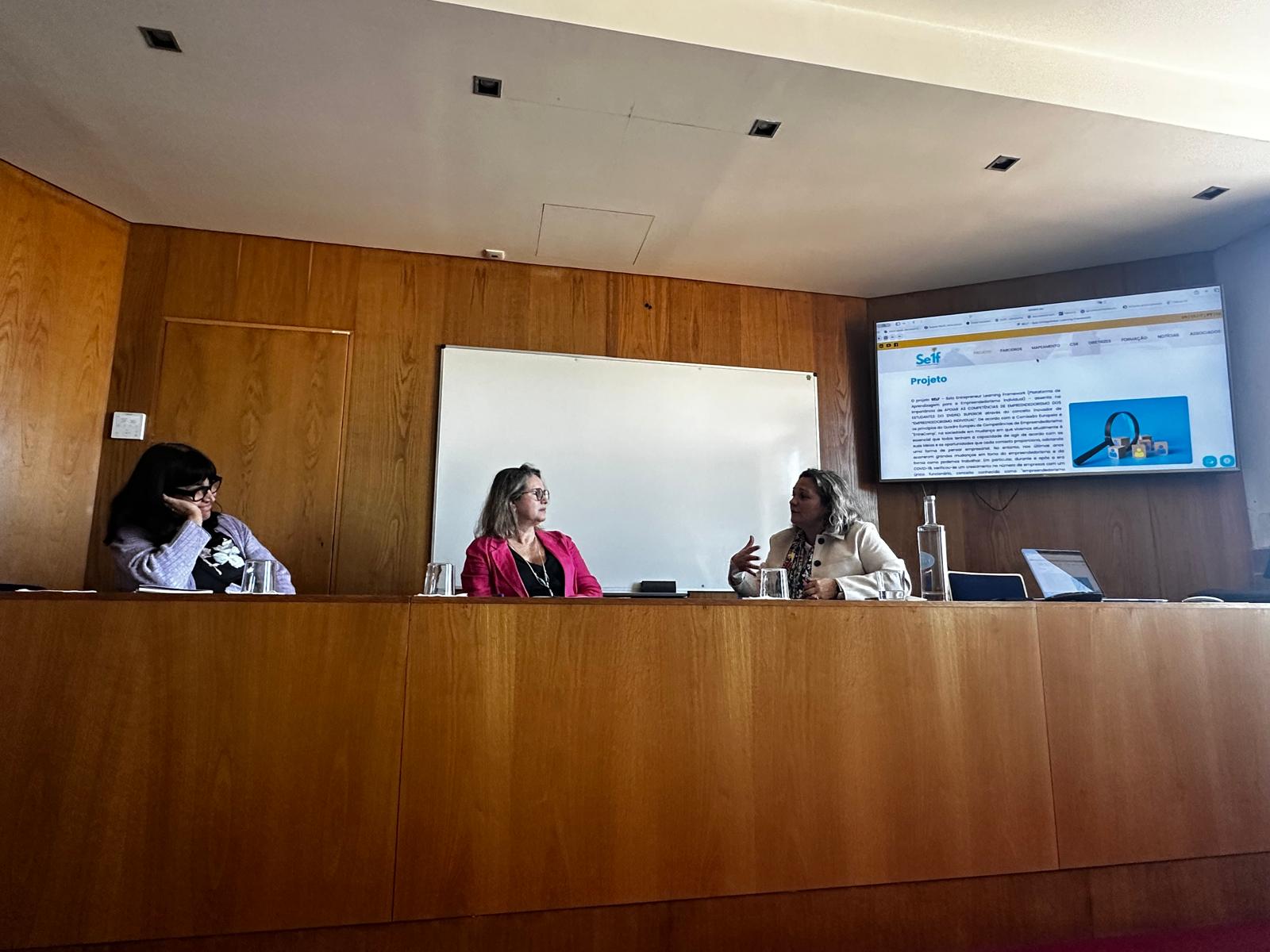
The SELF Project successfully delivered its final dissemination event on April 22, 2026, at the University of Aveiro (ISCA-UA), bringing together students, academic staff, and institutional stakeholders to explore innovative approaches to solo-entrepreneurship and future-ready skills. Organized within the framework of the University of Aveiro’s internationalization strategy, the event, titled “UA-MOVE: Tools for Future Students,” highlighted the project’s key outcomes and contributions to higher education, particularly in fostering entrepreneurial competencies and supporting transitions between academia and the labor market. A central moment of the session was the dedicated panel on the SELF Project, which featured a live demonstration of the SELF Digital Warehouse, one of the project’s flagship outputs. This digital platform was presented as a tool to support autonomous learning, skills development, and upskilling/reskilling pathways aligned with evolving market demands. The panel discussion addressed critical themes, including the integration of EntreComp into higher education curricula, the role of solo entrepreneurship as a viable career pathway, and the growing importance of digital tools in enabling flexible, personalized learning experiences. The event also reinforced the relevance of collaboration between higher education institutions and external partners in promoting innovation and enhancing student employability. As the SELF Project approaches its conclusion on April 30, 2026, this dissemination event marks a key milestone in ensuring the visibility, transferability, and long-term impact of its results. More information about the SELF Project is available at: https://www.solobiz.eu/ This press release is issued by the SELF Project consortium, including the University of Aveiro.
Read MoreDevelopment of solo-entrepreneurship curricula, tools, training and resources for self-employment
innovative training solutions to capitalise on the opportunities of solo-entrepreneurship and related socio-economic empowerment.
highlighting insightful inputs on success features on entrepreneurship competence building initiatives for HE students
Through our Social Corporate Responsibility initiatives, we embrace sustainability and inclusion, striving to create a positive impact on both the environment and society.